
Every year, millions of people step onto America’s trails seeking quiet, beauty, challenge or simply a break from the everyday. But as the number of people getting out to find adventure grows, so does the impact on ecosystems, wildlife and the trail experience itself. That’s where trail etiquette comes in. It’s not just about being polite; it’s about protecting the places we love and ensuring everyone can enjoy them safely for generations to come.
For the Student Conservation Association, trail etiquette is deeply connected to the work our crew members do every day. SCA crews build, maintain and restore over 1,000 miles of trails across the country each year. When visitors follow good etiquette, they help preserve the very trails that SCA crews work so hard to protect.
Well-built trails are designed to handle foot traffic, shed water and minimize erosion. But even the best-designed trail can’t withstand misuse. Cutting switchbacks, stepping off-trail to pass others or walking around puddles may seem harmless in the moment, yet each action widens trails, damages vegetation and accelerates erosion.
Ultimately, trail etiquette is about stewardship. Every visitor plays a role in keeping our natural spaces healthy.
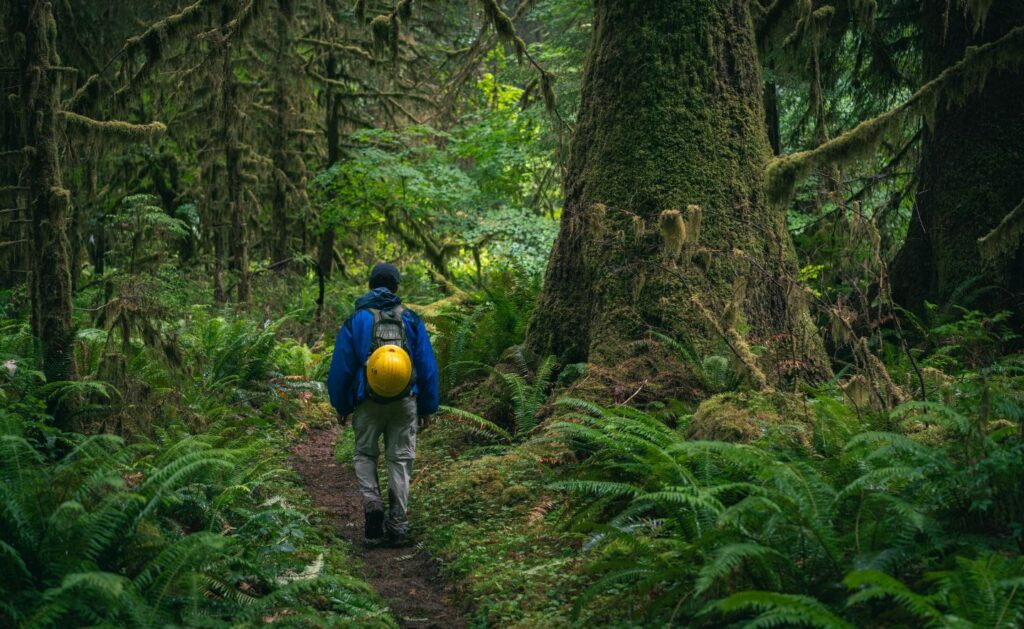
An SCA Olympic National Park Backcountry Trail Team crew member walking along a trail. (Photo Credit: Rafeed Hussain)
These practices make a big difference, especially in popular parks and fragile ecosystems.
Stay on the trail. It doesn’t matter if it’s muddy, narrow or if the view looks better a few feet away. Trails are engineered to concentrate impact; stepping off them spreads it.
Know who yields to whom. Hikers yield to horses and mules, and downhill hikers yield to uphill hikers. Everyone yields to wildlife.
Leave no trace. Plan to pack out everything you bring in, including food scraps. Even natural items like an apple core or orange peel can take months to decompose.
Respect wildlife. Give animals space and never feed them.
Keep noise low. Sound carries far in our natural spaces. Let the landscape speak.
Be prepared. Proper footwear, water and weather awareness prevent accidents that strain park resources.
These aren’t rules for rules’ sake. They’re practices that protect the trail, the wildlife and the experience for everyone who comes after you.
SCA members spend thousands of hours each year building rock steps, reinforcing switchbacks, clearing drainage and restoring damaged areas. Their work is slow, skilled and often physically demanding. A single stone step can take hours of work to set. A rerouted trail can take weeks.
When visitors follow good etiquette, they extend the life of that work. When they don’t, SCA crews often need to return to repair preventable damage. Trail etiquette and trail building are two sides of the same stewardship coin. One creates the path, the other preserves it.
Whether you’re on the trip of a lifetime hiking rim-to-river in the Grand Canyon or spending an afternoon strolling a local nature preserve, trail etiquette is a simple way to give back. Every choice, every step, helps protect the landscapes that inspire us.
And when you support the SCA, you’re helping train the next generation of conservation leaders who build, maintain and safeguard these trails.
If you believe in protecting our country’s wild spaces and empowering young people to lead in conservation, consider making a gift to the SCA. Your support on and off the trail fuels the trail crews who build safer, longer-lasting paths and helps ensure that everyone can experience the joy of the outdoors for generations to come.

Protect What You Love widget on website
"*" indicates required fields