

The fall foliage that autumn brings has a way of stopping you in your tracks. Whether you’re wandering beneath blazing maples in New England, hiking through golden aspens in the Rockies or watching the fog lift off a Midwestern lake, fall invites us to slow down, look closely and appreciate the changes in natural spaces. Across the country, those moments are made possible in part by young people at the Student Conservation Association, who work year-round to protect the trails, habitats and public lands we love.
If you’re heading outside this season to check out the fall colors, your smartphone is all you need to capture the beauty and to celebrate the conservation that makes these experiences possible. From national parks to your backyard, here are a few ways to elevate your fall photos while honoring the landscapes SCA members and other conservationists help care for.
Turning on HDR (high dynamic range) can help your phone blend multiple exposures into one balanced image – perfect for scenes with bright skies and deep shadows. If you’re using an iPhone, Live Photos can give you multiple frames to choose from, especially when photographing people or wildlife in motion.
The rule of thirds is a simple way to make your images more dynamic. Turning on grid lines in your camera app helps you easily frame up the scene. Place the most important element along the gridlines or at the intersections where the lines meet, or position your subject on the left or right third of the frame.
A small, lightweight tripod can make a big difference, especially in low light or when you’re lining up a landscape. Many compact tripods can wrap around branches or rocks, helping you get creative angles without disturbing the environment around you.
A single leaf, a rock, or a branch can add depth and scale to your image. These small details help viewers feel grounded in the scene and remind us that every ecosystem is made up of countless interconnected parts.
Soft, warm light brings out the richness of fall colors. There’s a reason the time around sunset and sunrise is called “the golden hour.” Overcast days are also great for even lighting and moodier images.
If the sun is washing out your shot, try shading your lens with your hand. And remember: some of the most memorable light appears at trail overlooks, lakeshores, and between the trees at public lands that conservation corps and volunteers help protect.
If you’re lucky enough to photograph wildlife, keep your distance. It’s safer and produces more natural, compelling images.
Today’s phone cameras often have multiple built-in lenses. Use these and your feet to get the shot. Zooming by pinching your screen can lead to blurry or blown-out photos. After you’ve gotten the shot, experiment with cropping to find even more interesting final shots.
Try putting your phone upside down and shooting from ground level, from above, or even from behind a natural frame like branches or tall grasses. Changing your perspective can transform an ordinary scene into something extraordinary.
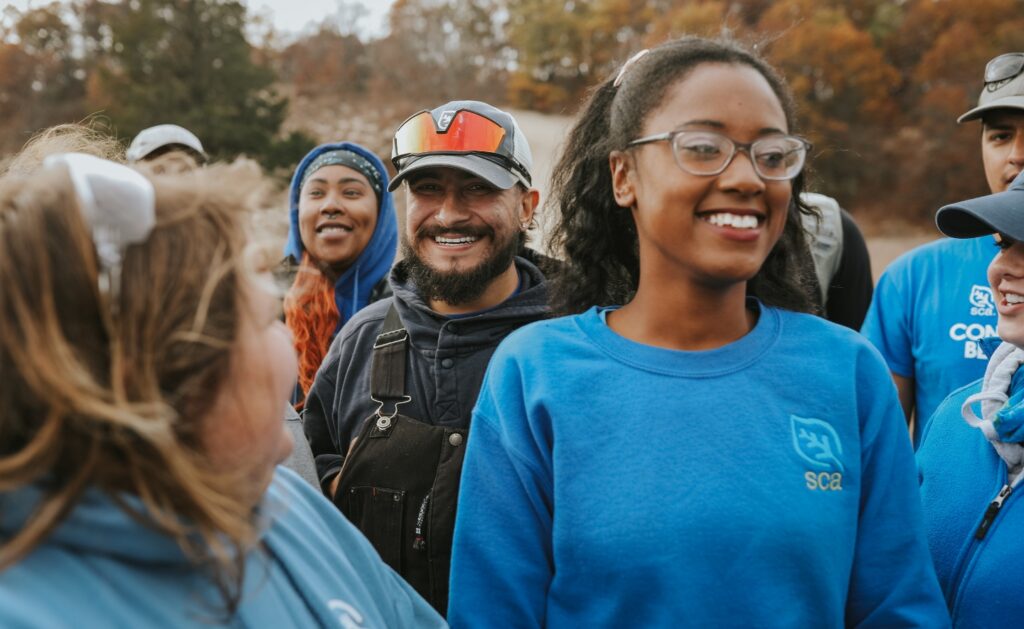
The SCA’s Indiana Dunes Restoration Crew. (Photo Credit: Roxanne Engstrom/Hawa Images)
Every fall photo is more than a snapshot; it’s a reminder of why conservation matters. The places we love don’t stay beautiful by accident. They stay beautiful because people across the country step up to protect them.
That’s where the SCA comes in. Across the country, young people are building trails, restoring habitat, improving public lands, and helping ensure these outdoor spaces remain available for everyone.
If you believe in preserving these landscapes and in empowering the next generation of environmental leaders, please consider supporting the SCA’s mission with a donation today. Your gift helps provide hands-on conservation opportunities for young people while protecting the trails, habitats and public lands that make adventures like these possible.
Protect What You Love widget on website
"*" indicates required fields
